
Play the Harmonium - Harmonium Level 1
We’ve crafted this course to give you everything you need to learn to sing and play harmonium for kirtan. You’ll soon be able to lead 12 kirtans with multiple-part melodies. Woven into this course is a lot of music education to give you a strong foundation.
-
Instructor: Bada Haridas
-
Level: All levels
-
Videos: 83 (12h 30m)
-
Reference pdfs: 37
-
Suggested before taking this course: The Language of Music course
-
Price: $250 USD
Course Overview
North Indian Music System & Western Music
We teach the North Indian system of music and how to sing the swara. This gives you the foundation to play by ear, understand raga, and easily transpose melodies.
Side by side you'll learn the basics of Western music. This will make it easier to play in different keys, and understand relative scales and chords.
Fingering, Chords, and Scales
In the beginning of Harmonium 1, we focus on playing melody and good fingering habits. Proper fingering helps develop strength and agility in your hands so your fingers can move about the keyboard easily.
You will also learn about chords, chord inversions, how to play chords in a kirtan, and how to weave a melody and chords together.
As part of this course we’ve provided a great resource: Scales and alankaras in all 12 keys. With these videos you can learn to play in different keys, and to transpose any melody into various keys, for yourself and to play for other singers.
Applying What You Learn in Kirtan
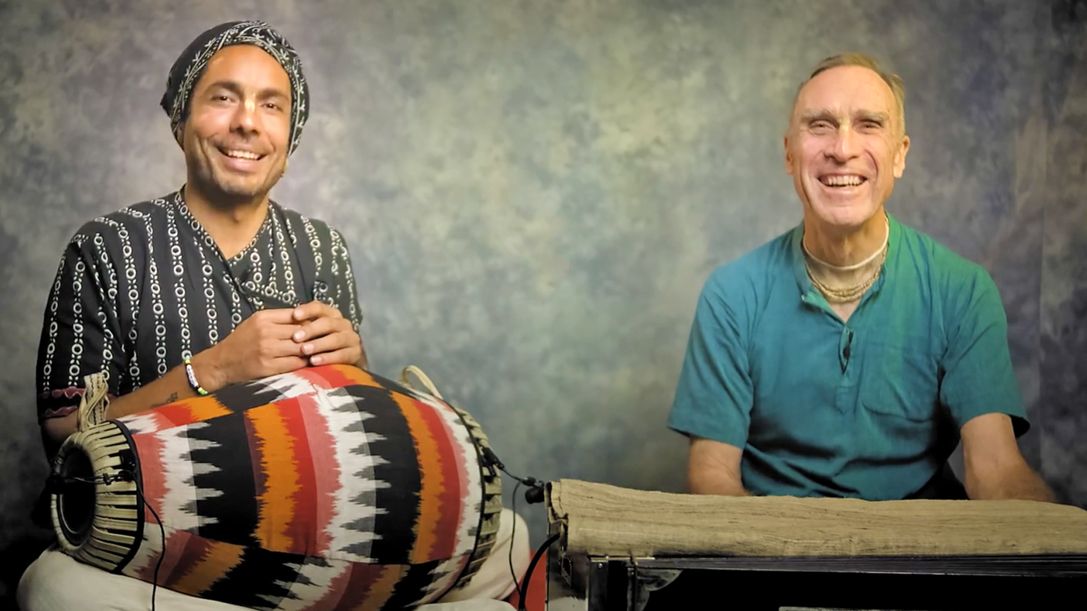
There are 12 Maha Mantra kirtan videos for you to learn and practice with. You'll have Visvambhar for your mridanga player, kartal players, and a lovely chorus.
The Kirtan Sequence & Flow videos are designed to give you an inside look at what is happening throughout the kirtan. This analysis will prepare you to lead kirtan yourself.
This course is much more than learning to play the harmonium. It's a comprehensive music course to give you everything you need to lead kirtan and accompany yourself and others with the harmonium.
Testimonials
What our students say
Course Preview
Frequently asked questions
Who is Harmonium 1 for?
Harmonium 1 is a beginner-to-intermediate foundation course designed to give you everything you need to begin playing harmonium with confidence, accompany kirtans, and lead kirtan yourself. It will also give you a solid theoretical understanding.
Do I need previous musical experience?
No musical experience required. This course teaches you the basics in both Indian and Western music.
What harmonium do I need?
Any 2 or 3 reed Indian harmonium works well. A basic beginner model is sufficient.
Keyboard is a good option for beginning. Casio and other brands make small keyboards, 32 notes or so, that are light and very portable. The keys are about the size of a harmonium and they have sounds like organ or accordion that are similar to harmonium. And you don’t have to pump them. Great for kids.
How much should I practice?
20-30 minutes daily is ideal. Careful and consistent practice with correct fingering builds mastery.
Why learn both North Indian and Western music?
The North Indian system develops your ability to recognize notes, scale types, ragas and to play by ear. Western music basics helps you understand chords, keys, and transposition.
What are swaras?
Swaras are the seven notes of Indian music: Sa Re Ga Ma Pa Dha Ni. They help you sing and play by ear.
What is North Indian music notation?
A music system using Sa Re Ga Ma Pa Da Ni to represent notes of the scales. It makes it easier to transpose melodies and understand ragas.
Why start with proper fingering?
Good fingering builds strength, agility, and freedom of movement across the keyboard. Practicing good habits from the beginning develops muscle memory so you don’t have to struggle with bad habits.
Why begin with the B♭ Major scale?
It suits most vocal ranges and sets the foundation for easily learning all other keys. The course includes lessons in playing all 12 keys to help you transpose the melodies into a key that’s best for you.
What are alankaras?
Alankaras literally means “ornaments.” In this context alankaras are scale-based exercises that develop your dexterity, rhythm, and confidence in any key.
Why learn alankaras in all 12 keys?
By learning the 12 keys, you can accompany any singer and transpose melodies easily. For accompanying yourself, you may only need a few keys.
How is this course connected to kirtan?
You will learn 12 Maha Mantra melodies and how to use them in kirtan. You will also get practical guidance in the flow of a full kirtan from beginning to end.
Why are there so many Maha Mantra melody lessons?
To experience different traditional melodies and help you learn how kirtan leaders choose, transition, and build devotional energy.
Why are there play-along videos with mridanga and kartals?
To give you an immersive experience of playing in kirtan and help you play in time, practicing with correct rhythm and speed.
Are the melodies difficult?
No, they are all suitable for beginners, but also regularly sung by experienced kirtan leaders. Each melody is taught step-by-step with notation and slow practice sessions.
Do I need to know chords to play kirtan?
No, you can accompany using melody alone. This is a more classic way of playing harmonium.
Chords can add harmonic flavor to a melody. They can be used alone or woven into the melody. In this course you will learn different options.
What are chord inversions?
Chord inversions are different ways of arranging the same chord tones. This is helpful for smooth transitions between chords.
Why do we study major (Bilaval) and minor (Asavari) scales?
Six scales are prominent in kirtan music. Knowing the major and minor scales makes it easy to learn the others with just a few adjustments.
What is transposition and why learn it?
Transposition means to shift a melody into another key. It is often necessary to adjust the key for the vocal range of the singer.
How do I receive the course completion certificate?
Complete all lessons and mark each as finished.
Is there a final test?
No exam—your progress through the course is your demonstration of completion.
meet your instructor
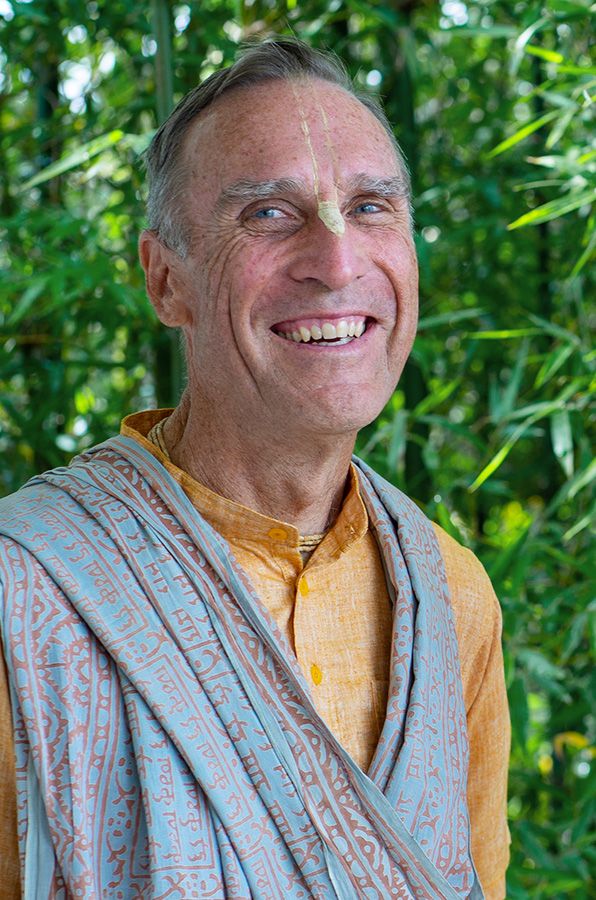
Bada Haridas
A lifelong musician, professionally trained in classical music and jazz, Bada Haridas received his Bachelors of Music Composition from the University of Southern California, and a scholarship for graduate studies at the Institute for Advanced Musical Studies in Montreux, Switzerland.
Since 1975 Bada Haridas has studied and taught Indian devotional music. He is a celebrated Kirtan singer and performs at festivals around the world.
In this unique course, he shares his knowledge and years of experience to help you enter into the world of sacred music and kirtan.
Since 1975 Bada Haridas has studied and taught Indian devotional music. He is a celebrated Kirtan singer and performs at festivals around the world.
In this unique course, he shares his knowledge and years of experience to help you enter into the world of sacred music and kirtan.
Bundle offer
Harmonium 1, Mridanga 1, The Language of Music & Kartal Course
Save on these 4 courses
Courses included:
Bundle offer
Harmonium 1 & The Language of Music
Save on these 2 courses
Courses included:
Bundle offer
Harmonium 1 & The Alchemy of Voice
Save on these 2 courses
Courses included:
Bundle offer
Harmonium 1, The Alchemy of Voice, The Language of Music & Kartal Course
Save on these 4 courses
Courses included:
Art of Kirtan is a program of Arts of Vaisnava Culture, Inc., a 501(c)(3) nonprofit organization. All donations in the US are tax deductible. EIN #59-3443801

Copyright © 2026 Art of Kirtan