
Temple Songs Course
From early in the morning until late in the evening, beautiful prayers are sung in Krishna temples all around the world. This Temple Songs course was created to make it fun and easy to learn these sacred songs. This course is designed to shorten your learning curve and assist your meditation when singing these songs.
For each of the Temple Songs, you’ll be guided in the:
- Correct Sanskrit and Bengali pronunciation
- Meaning of the words and verses
- “Learn to play” video instruction and notation for harmonium or keyboard
- Musicians and a choir to sing with
- Morning and evening melodies
-
Instructors: Bada Haridas & Visvambhar Sheth
-
Level: All levels
-
Videos: 40 (6h 50m)
-
Reference pdfs: 19
-
Price: $35 USD* Donation
Songs in the Course
Course Preview
Frequently asked questions
Who is the Temple Songs course for?
Our Temple Songs course is for everyone who wants to sing these songs in the kirtan, and for those who will be the lead singer. This course is also helpful for those learning kartals, mridanga and harmonium.
Is the Temple Songs course beginner-friendly?
Yes, it is beginner-friendly. The course is designed to give you everything you need to sing the Sanskrit and Bengali songs with proper pronunciation, lead the singing, understand the meaning of the songs, and begin playing harmonium to accompany the songs and kirtans.
Do I need previous musical experience?
No prior musical experience is required.
Do I need to have any instruments?
Instruments are not required for this course. The primary focus is for you to learn to sing the songs. If you want to play the melodies on harmonium or keyboard, we’ve included “Learn to play” videos and musical notation.
What can I expect to learn?
You will learn the following songs that are sung in the Temple daily:
• Gurvastaka for Mangala Arati
• Gurvastaka for Mangala Arati
• Srila Prabhupada Pranati & Panca-tattva mantra
• Hare Krishna morning melody
• Nrisimhadeva prayers (3 melodies)
• Tulasi Arati prayers and kirtan
• Guru-vandana (Srila Prabhupada guru puja)
• Jaya Radha Madhava (2 melodies)
• Bhoga Arati
• Gaura Arati and kirtan
Are play-along lessons included?
Yes. There are lessons for each Temple song that includes the lyrics, mridanga, kartals, harmonium and a beautiful choir. Whether you are practicing singing or playing an instrument, you’ll have a great team of musicians to practice with.
What courses do you recommend I take after Temple Songs?
The Kartal Course is great for strenthening rhythm, Alchemy of Voice for strengthening singing, and depending on your interests, you could take Harmonium and/or Mridanga.
How do I receive the course completion certificate?
Complete all lessons and mark each as finished.
Is there a final test?
No exam—your progress through the course is your demonstration of completion.
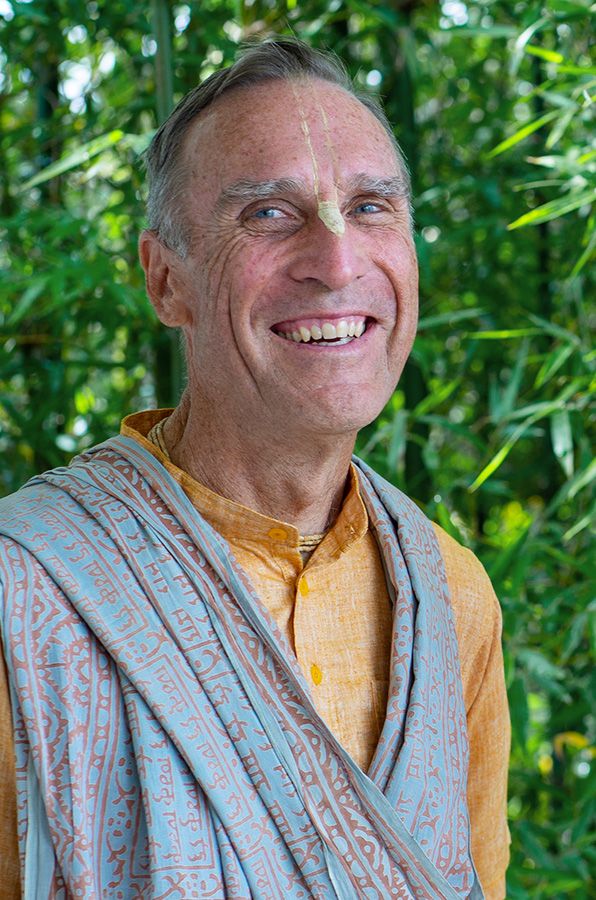
meet your instructor
Bada Haridas
A lifelong musician, professionally trained in classical music and jazz, Bada Haridas received his Bachelors of Music Composition from the University of Southern California, and a scholarship for graduate studies at the Institute for Advanced Musical Studies in Montreux, Switzerland.
Since 1975 Bada Haridas has studied and taught Indian devotional music. He is a celebrated Kirtan singer and performs at festivals around the world.
In this unique course, he shares his knowledge and years of experience to help you enter into the world of sacred music and kirtan.
Since 1975 Bada Haridas has studied and taught Indian devotional music. He is a celebrated Kirtan singer and performs at festivals around the world.
In this unique course, he shares his knowledge and years of experience to help you enter into the world of sacred music and kirtan.
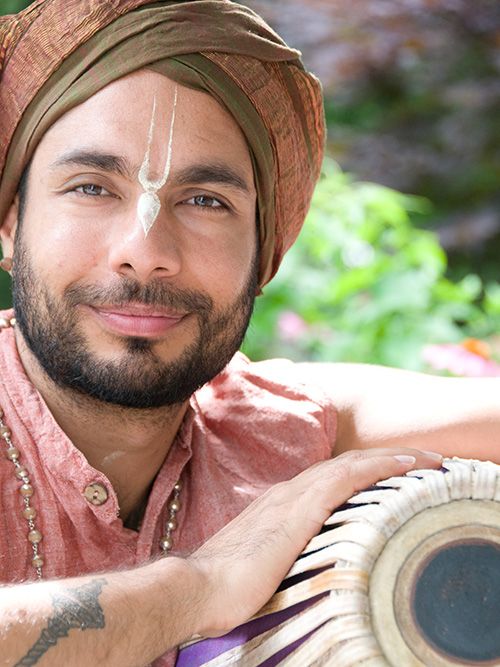
meet your instructor
Visvambhar Sheth
An internationally recognized Kirtan singer, recording artist, and inspirational speaker, Visvambhar (Vish) has a lifelong connection to India and its culture. Being brought up in a Kirtan family and community, he began leading Kirtan from the age of five. Vish is a multi-instrumentalist and a master of the Mridanga drum. From childhood to the present day, he has studied with Bablu Mahasaya, a recognized master in the lineage of Narottam das Thakura.
Art of Kirtan is a program of Arts of Vaisnava Culture, Inc., a 501(c)(3) nonprofit organization. All donations in the US are tax deductible. EIN #59-3443801

Copyright © 2026 Art of Kirtan